

TL;DR
- Salesforge hit $3M ARR in year one with 5 people (3 co-founders, 1 engineer, 1 support)
- 60% of salespeople are "dead wood" — they shouldn't be in sales at all
- Frank's framework: agent first, agency second, hire last
- 4 account execs today out-produce his old team of 50
- Per-seat pricing is dying — usage-based pricing is replacing it
- Cold calling is the hardest sales skill, but the highest-converting channel
- Localization 2x's reply rates in non-English markets
$0 to $3M ARR in year one
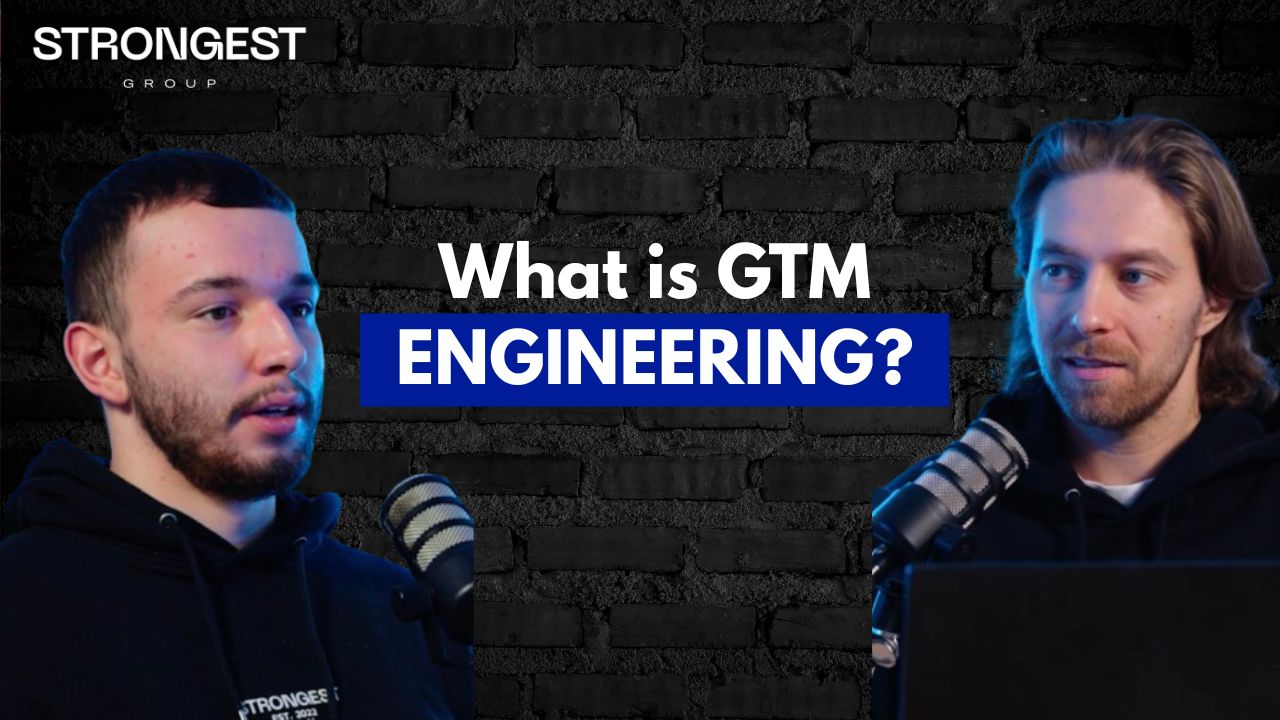
We sat down with Frank Sondors — founder of Salesforge, one of the fastest-growing AI sales platforms in B2B SaaS.
The numbers behind Salesforge are remarkable: in their first year, they hit $3M ARR. The team that did it? Three co-founders, one engineer, and one person on support. That's it.
For context: Frank's previous role as VP Sales had him managing a team of 50. That team produced 300–400 demos per month. Today, his team of 7 produces over 500 demos per month.
How? By rebuilding everything from the ground up around two principles: scale through systems, not bodies — and use AI agents wherever possible.
This is the playbook.
Why 60% of salespeople are "dead wood"
Frank doesn't soften his language: most people in sales shouldn't be in sales.
For every 10 sales people that you hire, typically only one person out of 10 is natural. Two to three would be a sponge that can be trained up. And then 60% is what's typically called dead wood. Essentially, these people should not be in sales.
His logic: as a head of sales, you're under pressure to deliver pipeline. So you hire whoever you can, run them through a "sifting mechanism," and most don't survive. Frank's solution wasn't to hire better — it was to **stop scaling through bodies entirely**.
Instead of hiring 50 reps to build pipeline, he built systems. Instead of teaching mediocre reps to be average, he equipped great reps with software designed for great reps.
The end of per-seat pricing
A core insight from Frank: the legacy sales tech stack is built on a flawed incentive.
> *"Per-seat pricing means if you're going to be increasing conversions massively for the companies, then you will need fewer bodies to actually generate these outputs. So it's not necessarily in their interest to massively increase conversion rate or output levels — because that means fewer seats will be bought."*
Translation: the software you've been buying for years doesn't want to make you radically more efficient, because they'd lose revenue.
That's why Salesforge built everything around usage-based pricing — you pay for what you use, not for how many seats you have. The more efficient your team becomes, the more you use the system, the more Salesforge wins. Incentives align.
This shift — from per-seat to usage-based — is one of the biggest changes in B2B SaaS right now. And it's why companies that doubled down on AI agents and lean teams are winning, while companies still scaling through headcount are stalling.
"Agent first, agency second, hire last"
This is the framework most B2B founders should print on their wall.
When Frank has a problem in his business, he goes through four options in order:
1. Off-the-shelf AI agent
Can I buy a ready-made AI agent that solves this within a week or two? If yes, do that.
2. Custom n8n workflow
If no off-the-shelf agent exists, can I build one with n8n and integrations? Salesforge has 300+ active workflows running today.
3. Agency
If a custom agent is too complex, hire an agency. They've solved this for 10+ other clients. Time-to-value is days, not months.
4. Hire
Only as a last resort. Hiring is slow, expensive, and the failure rate is high. Frank has hired hundreds of reps and fired 100+. Most aren't natural fits for sales.
Why agency before hire?
''Training up reps, giving them the right tools, knowing how to use Claude Code, how to use Clay, how to plug that in Salesforge or whatever — having that know-how will take you a long time to figure this out. Typically, as a founder, a lot of founders really are bad at distribution."
Hire an agency, plug them in, see value immediately. The agency knows what they're doing because they're doing this for multiple clients.
When agencies beat AI agents
Frank is bullish on AI agents — but he's clear about their limits.
Agents struggle with:
- No clear offer. If you don't have a strong offer, no agent can save you.
- Enterprise sales. Above $50K ACV, agents can't navigate complexity.
- List building. Despite the hype, agents still aren't reliable here.
- Cold calling. Voice agents are illegal for outbound in most markets.
For these cases — and especially for cold calling — agencies win.
"If you do the three things you want to be doing, which is hey, I'm emailing people, I'm sending them LinkedIn messages, but I also need to call them — then the agency route with a cold calling component is really the best route."
This is exactly why companies that combine email + LinkedIn + cold calling outperform single-channel approaches. And finding "hunters" (real cold callers, not farmers) is one of the hardest things to do in modern sales.
The Rule of Three for outbound
Frank's framework for penetrating accounts uses threes everywhere:
3 stakeholders per account:
- Someone senior (VP, Director)
- Someone who works on the specific painpoint
- A third decision-maker
3 channels:
- Email
- LinkedIn
- Phone
3 conversion paths on your website:
- Self-service / free trial
- Book a demo
- Live chat (with auto-dialing)
Combine all three layers and you have 27 ways to engage every account. Most agencies use 1–2.
The key insight: treat every touchpoint as the first one. Even within a multi-channel sequence, your value proposition must be visible in every message — because reply rate data shows recipients often only see one of your touchpoints.
Email vs LinkedIn vs Cold calling
Frank's data on channel performance mirrors what we've seen across our own clients:
- Email reply rate: 2–3%
- LinkedIn reply rate: 20–30%
- Cold call response rate: 3% in the US (more in markets where it's still socially acceptable)
LinkedIn dominates in reply rate. But once you get someone on a phone call, conversion to a booked meeting is significantly higher than any other channel — because objections get handled live.
The winning formula in 2026 is what we call "all-bound": email + LinkedIn + cold calling on top accounts, supported by AI agents that handle the volume work.
Going to the US first
If you're a B2B SaaS founder, Frank has one piece of advice that contradicts most European thinking:
"You don't build for the Europeans or for whoever you want to build. You literally go immediately into the US market and you build for the Americans."
Why? The US is the #1 market for B2B software, period. If you build for any other market first, your probability of success drops dramatically.
Salesforge has zero boots on the ground in the US, but their teams work US time zones (2 PM to 11 PM CET). Customer support runs 24/5 with weekend coverage — because their customers are active during weekends too.
This isn't optional for fast-growing companies. You either commit to the biggest market or accept slower growth.
"Invest to learn" — the founder's mindset
One of Frank's most quotable principles:
"You pay for learnings. Don't look at it as oh wow we burned X amount of money. Just think of a standpoint that you invest to learn."
He gave an example: at 4 AM the night before our podcast, he authorized a $10,000 test on a new channel — in 30 minutes, after one call. Was the test risky? Yes. Could it fail? Yes.
But the alternative — endless deliberation, board meetings, "let me think about it" — kills more startups than failed tests ever do.
Frank's principle: run tests at scale (statistically significant), commit to a 2-3 month minimum window, and accept that most tests fail. The winning tests pay for everything else.
Frank's three predictions for B2B sales
1. Mass layoffs in sales are coming.
Not all jobs disappear — but there will be far fewer SDR-style roles. The roles that survive: technical "tinkerers" (GTM engineers), great cold callers, complex enterprise sellers, and account managers who consult.
2. Agents will keep getting better, faster than humans.
Over the last 2 years, AI sales agents had massive churn rates because they weren't ready. Compound improvements are now hitting B-player level. Within a year, they'll match A-players on email and LinkedIn.
3. Cold calling will remain human.
Voice AI agents on outbound calls are illegal in most markets. So cold calling stays human — and great cold callers will become more valuable, not less.
What this means for B2B teams in 2026
If you're running a B2B sales team, three takeaways:
1. Stop defaulting to "hire more SDRs." The 2025 playbook of throwing bodies at pipeline problems is dying. Build systems first.
2. Use Frank's framework: agent first, agency second, hire last. Not because hiring is bad, but because it's the slowest, most expensive option.
3. Combine channels. Email + LinkedIn + cold calling beats any single channel. And agencies often deliver this faster than building it in-house.
The companies that win in 2026 won't have the biggest sales teams. They'll have the smartest systems — and the right partners.



.jpeg)
.jpeg)
